You prepare a founder for a press interview the same way you prepare for a board meeting where someone else controls the agenda: by deciding in advance what you need to say, what you refuse to guess at, and how you will get back to your point when the conversation drifts. Most founders do not lose an interview because they lack a message. They lose it because the first time they think hard about that message is while the reporter is already talking. Here is how to fix that before it costs you a headline.
How do you decide whether to say yes to an interview?
By checking that the opportunity, the outlet, and the timing all actually serve you, not by reflexively accepting because a journalist asked.
Before you agree, find out the reporter's beat, their recent coverage, and the specific story they are working on, the same groundwork covered in how to pitch a journalist from the other side of the request. If a reporter cannot tell you the angle, ask. You are allowed to say the story is not a fit for you, and a polite decline costs you nothing with a journalist who covers your space regularly. What costs you something is saying yes to every request and showing up unprepared to several of them, which is how a founder becomes known as an unreliable quote rather than a go-to source.
What should happen before you ever get on the call?
Three things, in this order: agree on the story, prepare three message points, and rehearse the one sentence that has to survive editing.
First, confirm with the reporter, or your PR team, exactly what the piece is about and what role you are playing in it, expert context, a company announcement, or a response to someone else's news. Second, write down no more than three things you actually want to be true in the final piece. Three is deliberate. A founder who tries to make five points makes none of them memorably, and a reporter on a deadline will keep at most one or two anyway. Third, draft the single sentence you most need quoted accurately, in your own words, short enough to survive a tight edit. If you cannot say it in one breath, it will not survive to print.
How do you build a message you actually want repeated?
By making it specific enough that nobody else could have said it.
A generic claim, "we are passionate about innovation," gives a reporter nothing to quote and nothing to fact-check, so it either gets cut or gets replaced with the reporter's own paraphrase, which you do not control. A specific claim, a number, a named decision, a concrete example, is both more quotable and harder to misrepresent. This is the same discipline that makes a pitch worth a journalist's time in the first place: Muck Rack's State of Journalism 2026, based on survey responses from journalists gathered between January 30 and March 2, 2026, found that 58 percent of journalists rank interview access to relevant sources among the most valuable things a pitch can offer, behind only clear relevance to their beat at 70 percent. Being a reliably specific, well-prepared interview is what keeps a reporter coming back to you instead of a competitor, a pattern covered in full in how founders get quoted in major publications.
What do you do when a reporter asks a hostile or off-topic question?
Answer the question honestly if you can, then bridge back to your message. Do not dodge visibly, and do not pretend the question was not asked.
A visible dodge, "I'm not going to get into that," reads worse in print than almost any honest answer would, and a skilled reporter will simply ask again. The better move is a short, direct answer to what was actually asked, even an uncomfortable one, followed by a bridge: "and that connects to the bigger point, which is..." Reporters expect and respect this. What damages you is refusing to engage at all, or guessing at facts you do not actually know. If you do not know a number, say so and offer to follow up with it. A wrong number you invented on the spot will outlive the interview.
Why does a careful, unremarkable answer beat a clever one?
Because a clever line is the one most likely to get clipped out of context, and an unremarkable but accurate one almost never is.
The cautionary case here is United Airlines CEO Oscar Munoz, who in April 2017 sent an internal memo, later made public, defending his staff's handling of a passenger who had been forcibly removed from an overbooked flight and calling the man "disruptive and belligerent," as reported by Fortune at the time. The memo was not a live interview, but the lesson is the same one media training exists to teach: the first instinct under pressure is often to defend, minimize, or editorialize, and that instinct is usually wrong on the record. Munoz had to issue a second, more contrite public apology days later once the backlash made the first statement untenable. A spokesperson who has rehearsed staying factual and empathetic under pressure does not need a second apology.
How do you practice this without sounding robotic?
By rehearsing the content of your answers, not a script, and by practicing out loud with someone who will actually push back.
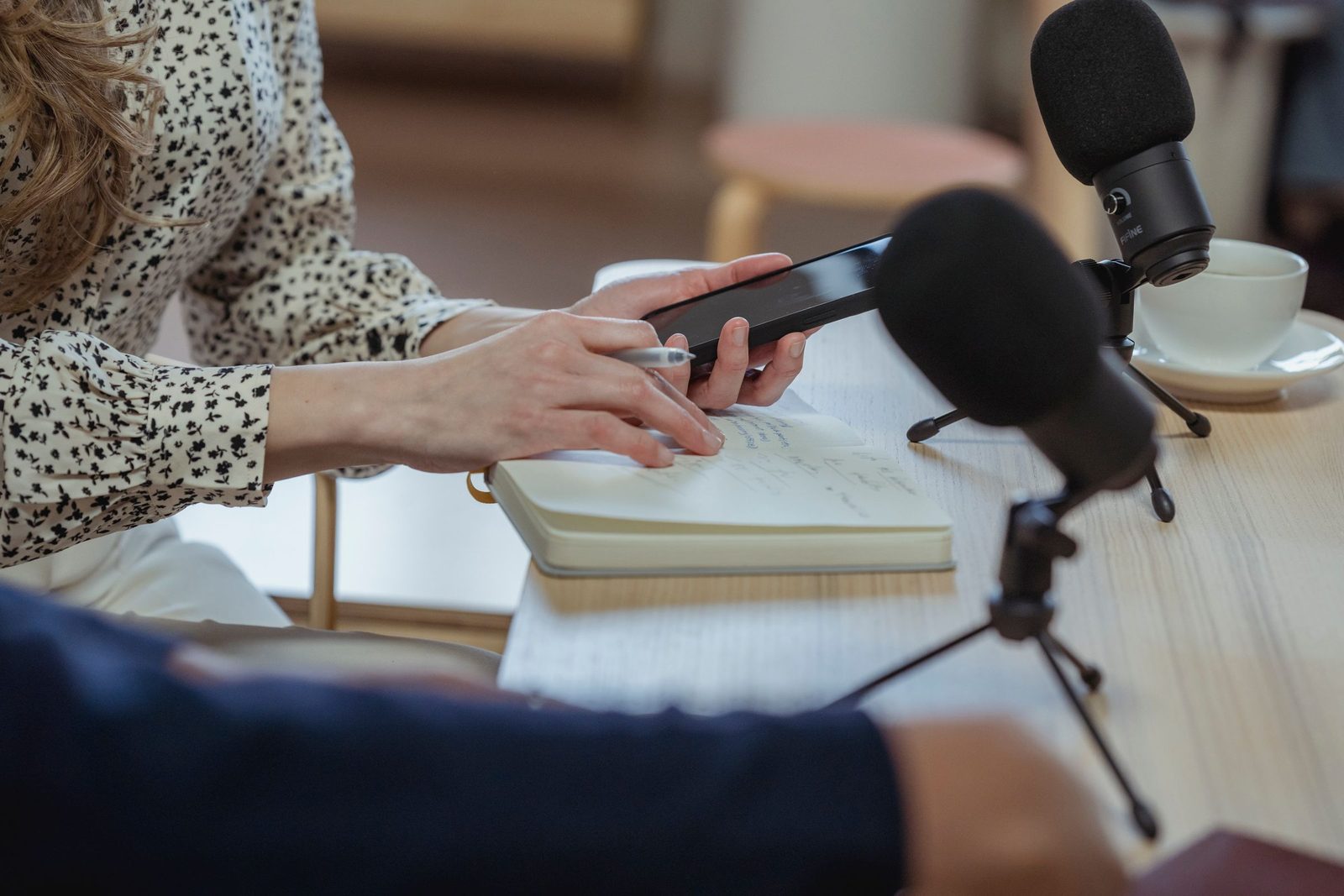
Read your three message points into your phone and listen back. You will hear the parts that sound natural and the parts that sound memorized, and the second group needs rewriting, not more repetition. Better still, have a colleague or your PR team ask you the five questions you are most dreading, out loud, before the real interview happens. The goal is not a performance. It is removing the moment of surprise, so that when the real reporter asks the real hard question, you are retrieving an answer you already have rather than constructing one live. This matters whether the format is a print interview, a podcast appearance, or a panel, and it matters even more once a crisis is underway, which is why it is the first step in any crisis communication plan.
What happens after the interview ends?
You do not relax just because the recorder is off.
Anything said after a reporter says "that's everything I need" is still on the record unless you have explicitly agreed otherwise before you say it, not after. If you misspoke on something factual, a quick, polite follow-up email correcting the record is normal and welcomed by most reporters; a request to kill a true but unflattering quote almost never is. Keep a short internal note of what you said and were asked, so the next interview on the same topic is informed by the last one instead of starting from zero.
The direct answer, for anyone who read this far
Media training for a founder is mostly preparation, not performance: know why you are doing the interview, hold three message points instead of ten, have one sentence ready that can survive a hard edit, and answer the uncomfortable question honestly before bridging back to your point. The cost of skipping this is not hypothetical. It is Oscar Munoz's first memo, the defensive, unreviewed instinct that became the headline instead of the news. If you want help preparing a founder or executive before a specific interview or launch, request a quotation and we will run the rehearsal with you.